Historically, our cities have been based on a linear consumption model involving the extraction of resources, their use and the generation of waste. We are currently undergoing a transition from this model to the ‘circular’ model, where, for example, biowaste is no longer considered rubbish but a resource that can be used as compost for urban agriculture and parks or to produce biogas.
These measures, together with others such as the promotion of short supply chains—giving priority to locally sourced products—seek to achieve the much-needed reduction in carbon footprints in the face of the great challenge of slowing down climate change and biodiversity loss.
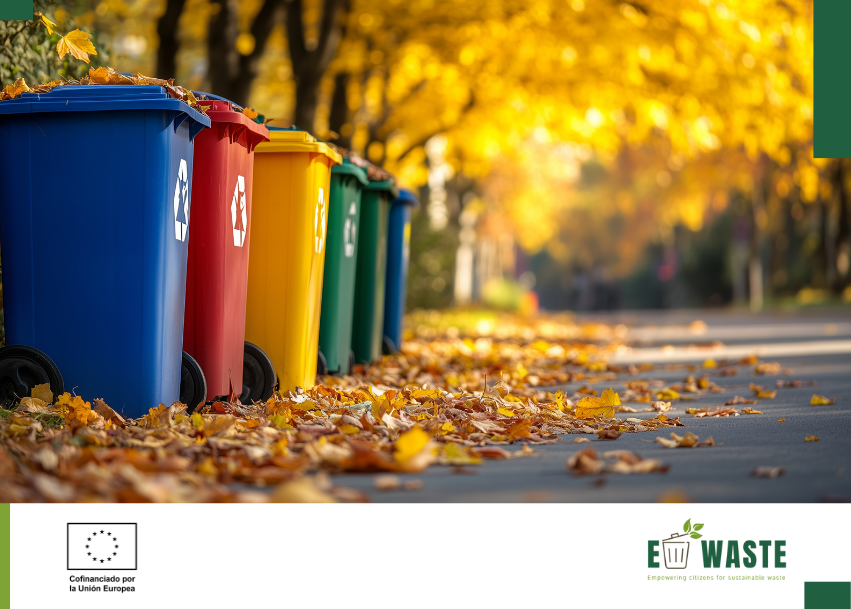
The role of municipalities in this transformation is essential, as the various policies implemented by administrations, such as selective waste collection, the promotion of food waste reduction in homes, restaurants and shops, and the promotion of local consumption models, will be key in the transition to circularity.
This is the context in which EU-Waste was founded, a transnational initiative that promotes the circular economy by addressing the challenges of urban and food waste management. This is the context in which EU-Waste was born, a transnational initiative that promotes the circular economy by addressing the challenges of urban and food waste management. The project connects municipalities and organisations to share best practices in this area and promote sustainable development and environmental protection in European municipalities.
EU Waste will raise awareness and empower citizens to actively participate in sustainable waste management by providing quality information and facilitating spaces for public discussion. It will also share best practices in urban and food waste management among its partner organisations and carry out a joint assessment of waste management in municipalities, identifying areas for improvement.
The project is led by three partners: Calles Town Council, iNNovaHealth Foodlabs and REZOS BRANDS.
Calles Town Council (Coordinator) is a municipality in the Province of Valencia for whom adapting their local reality to the new circular model and waste management, in line with European directives, is a significant challenge to be faced.
iNNovaHealth Foodlabs (Patras, Greece) is a nutritional research and innovative functional food development laboratory which, based on its experience in food product development and its knowledge of analytical technologies for food quality assessment, will provide scientific data to support the project’s decisions and actions.
REZOS BRANDS (Greece) is an agri-food company specialising in superfoods and functional foods that operates with a vertical ‘farm-to-fork’ business model and has extensive knowledge of market trends and European food regulations.
EU Waste is a European project aligned with the European Green Deal and the Sustainable Development Goals (SDGs), co-financed by the European Union.